

 1 / 12
Aluminum profiles production line
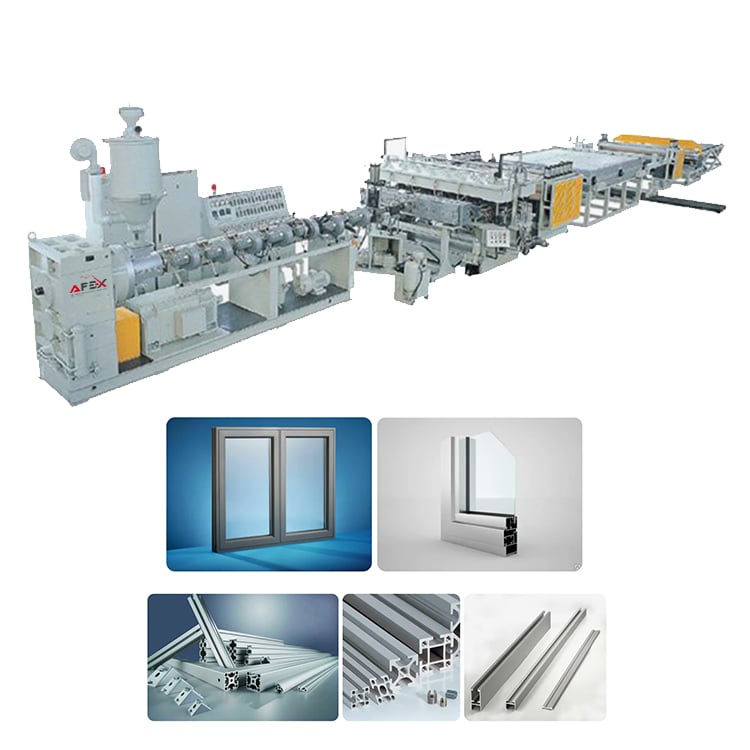
This fully automated press line for the production of aluminum profiles is based on high-pressure extrusion technology.
- Production Capacity
- 3000 kg/furnace
- Voltage / Power
- 380V
- Model
- 630GH
- Dimensions
- 7 × 2.8 × 3.2 m
- Main Motor Power
- 55 kW
- Heating Power
- 18 kW

Overview
About the equipment
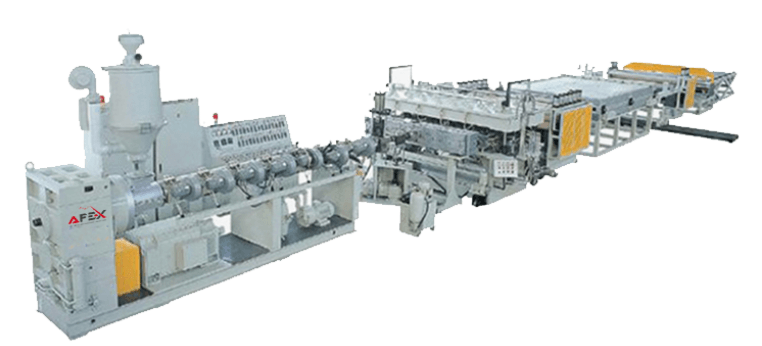
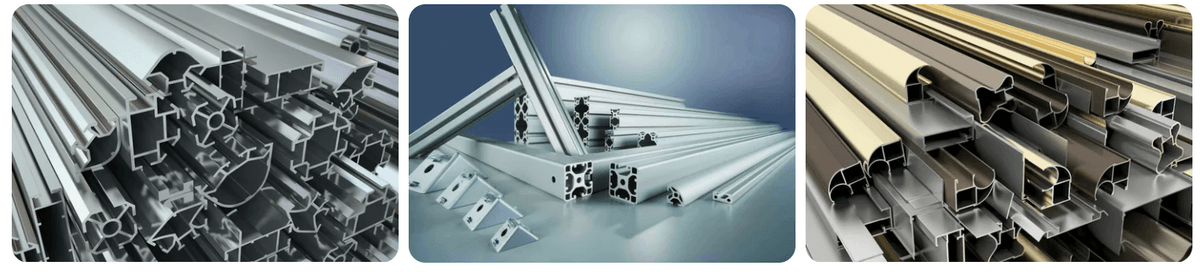
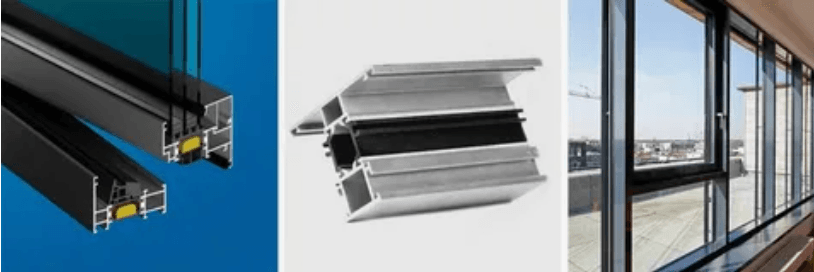
This fully automated press line for the production of aluminum profiles is based on high-pressure extrusion technology. The line consists of a press machine, a die furnace, a hot cutting furnace, a cooling table, an automatic tensioning mechanism, and an aging furnace. The equipment ensures industrial-level efficient production, is equipped with energy-saving systems, and guarantees stable operation through automatic control. It is used in the production of products such as aluminum pipes, window and door profiles, and industrial profiles.
General
- Model
- 630GH
- Country of Manufacture
- China
- Raw Material
- Aluminum billet (102 mm, 6 m)
- Product Type
- Aluminum profiles
- Production Capacity
- 3000 kg/furnace, continuous extrusion
- Material
- Heat-resistant steel, aluminum alloys
- Equipment Weight
- 25 tons
- Dimensions
- 7 × 2.8 × 3.2 m
- Voltage / Power
- 380V, 55 kW main motor, 18 kW heating
- Workforce
- 4–6 persons
- Electricity Consumption
- Approx. 100 kW
- Gas Consumption
- Natural gas
- Sewage Required
- No
Extrusion Press
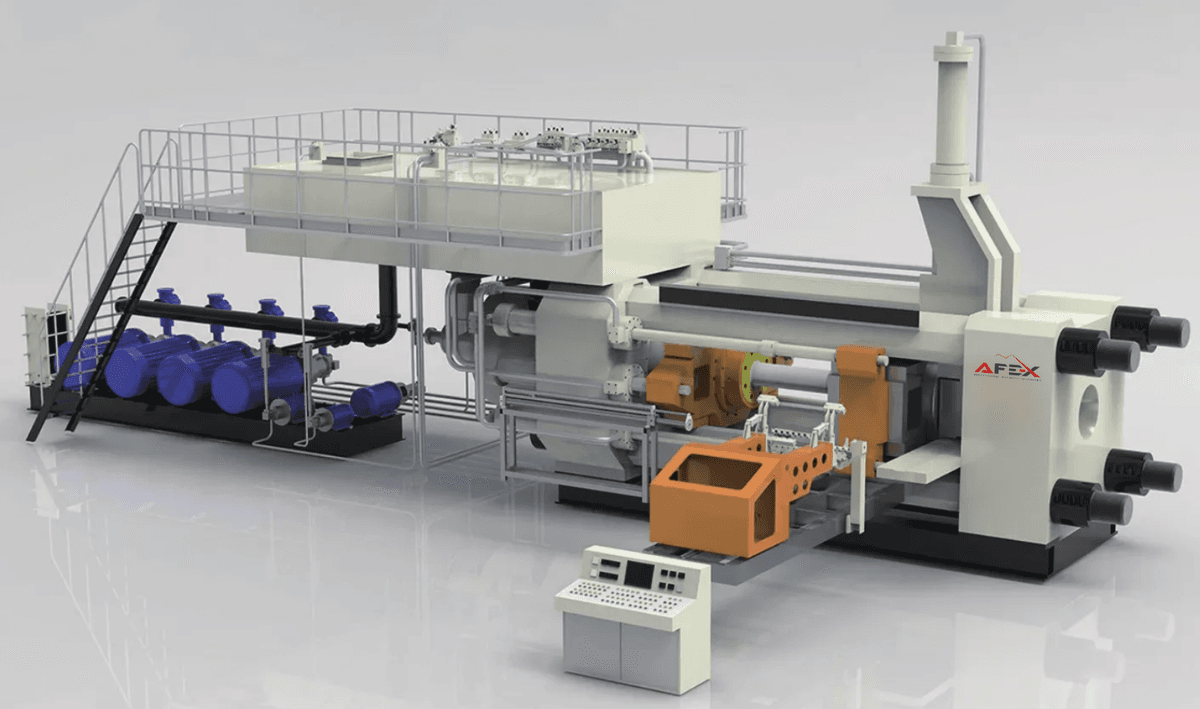
As one of the leaders in the aluminum extrusion field, we offer extrusion press equipment of various tonnage. These presses allow the production of both small and large-sized aluminum profiles with high precision.
Our extrusion equipment meets industrial standards, ensuring the narrowest tolerance limits.
In the aluminum industry, both direct and indirect extrusion technologies are available for various applications. The most common method is direct extrusion with a hydraulic press, which ensures high efficiency and durability.
Unit 2
- Model
- 630GH
- Extrusion Pressure
- 633 tons
- Aluminum Billet Diameter
- 102 mm
- Main Motor Power
- 55 kW
- Heating Power
- 18 kW
- Extrusion Speed
- up to 8.8 mm/s
- Equipment Dimensions
- 7 × 2.8 × 3.2 m
- Equipment Weight
- 25 tons
- Cooling Table Size
- 26 × 6 m
- Thermal Furnace Capacity
- 3000 kg/furnace
- Thermal Furnace Temperature
- up to 250°C
- Mold Furnace Power
- 18 kW
- Hot Cutting Furnace Fuel
- Natural gas
- Total Line Length
- At least 60 meters
Extrusion Presses Technical Table

- Model
- Working Pressure (MPa) · Piston Diameter (mm) · Side Cylinder Size (mm) · Billet Size (mm) · Press Height (mm) · Output Size (mm) · Total Power (kW) · Dimensions (mm) · Weight (t)
- 500T
- 21 · Ø520 · Ø125 × Ø70 · Ø80 × 380 · 850 · Ø110 × 110 · 72 · 5700 × 3100 × 2500 · 20
- 600T
- 21 · Ø580 · Ø160 × Ø120 · Ø90 × 480 · 850 · Ø110 × 110 · 105 · 6000 × 3200 × 2600 · 24
- 700T
- 21 · Ø620 · Ø160 × Ø120 · Ø100 × 520 · 1030 · Ø120 × 140 · 130 · 7900 × 2800 × 3500 · 38
- 800T
- 21 · Ø660 · Ø180 × Ø140 · Ø110 × 530 · 1050 · Ø130 × 150 · 132 · 8500 × 3015 × 3560 · 42
- 1000T
- 21 · Ø750 · Ø200 × Ø150 · Ø120 × 600 · 1095 · Ø140 × 160 · 195 · 9660 × 3070 × 3900 · 53
- 1250T
- 21 · Ø840 · Ø200 × Ø150 · Ø140 × 650 · 1180 · Ø170 × 200 · 250 · 11920 × 3230 × 3900 · 65
- 1400T
- 21 · Ø870 · Ø220 × Ø150 · Ø150 × 680 · 1180 · Ø180 × 210 · 260 · 11920 × 3230 × 3900 · 70
- 1650T
- 21 · Ø950 · Ø220 × Ø150 · Ø178 × 800 · 1530 · Ø210 × 260 · 315 · 13400 × 3580 × 4900 · 90
- 2000T
- 21 · Ø1050 · Ø250 × Ø180 · Ø200 × 800 · 1680 · Ø240 × 300 · 350 · 1650 × 4000 × 5100 · 136
- 2500T
- 21 · Ø1180 · Ø250 × Ø180 · Ø228 × 1000 · 2030 · Ø280 × 350 · 550 · 17500 × 6000 × 6500 · 250
- 3000T
- 28 · Ø1180 · Ø250 × Ø180 · Ø254 × 1000 · 2030 · Ø338 × 480 · 780 · 17500 × 6000 × 6500 · 300
- 4350T
- 28 · Ø1350 · Ø320 × Ø220 · Ø280 × 1000 · 2280 · Ø450 × 500 · 960 · 19500 × 6900 × 7500 · 350
- 5500T
- 28 · Ø1500 · Ø380 × Ø250 · Ø400 × 1200 · 2350 · Ø490 × 620 · 1660 · 22000 × 8000 × 10000 · 650
- 8200T
- 28 · Ø1780 · Ø480 × Ø320 · Ø485 × 1750 · 2585 · Ø550 × 800 · 2500 · 28000 × 9800 × 11000 · 800
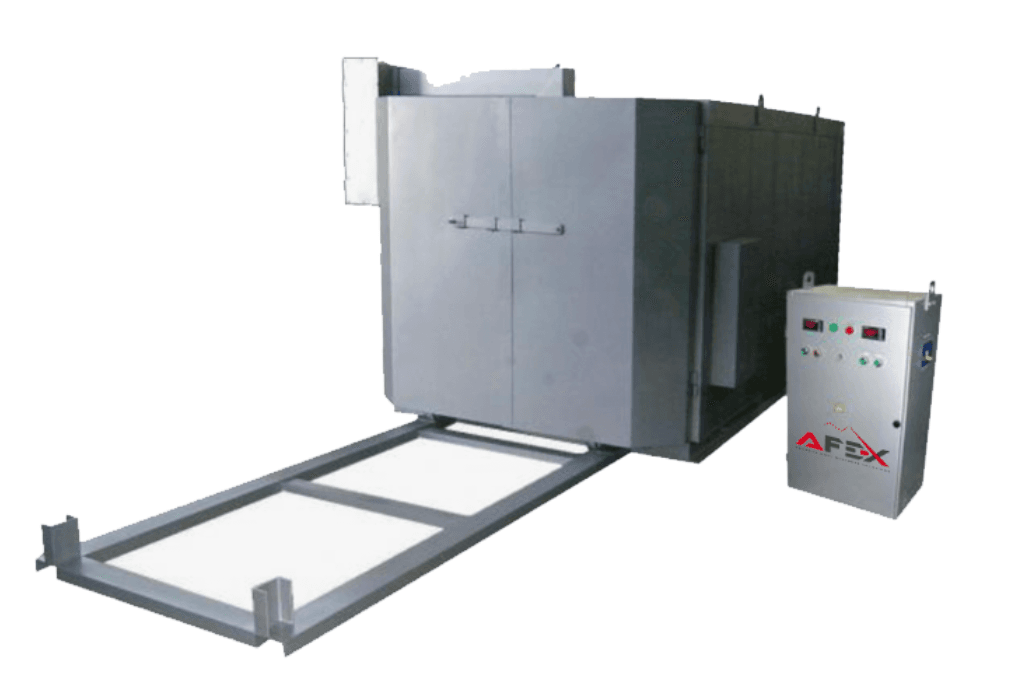 Mold heating furnaces are designed to preheat extrusion dies to the optimal temperature before the aluminum extrusion process.
The equipment uses electromagnetic induction heating technology.
It is equipped with a fully automatic control system, allowing simultaneous or independent heating of multiple dies.
Average heating time is 25 minutes.
PID-based temperature control protects from overheating and ensures uniform heating with ±1°C accuracy.
Mold Heating Furnace
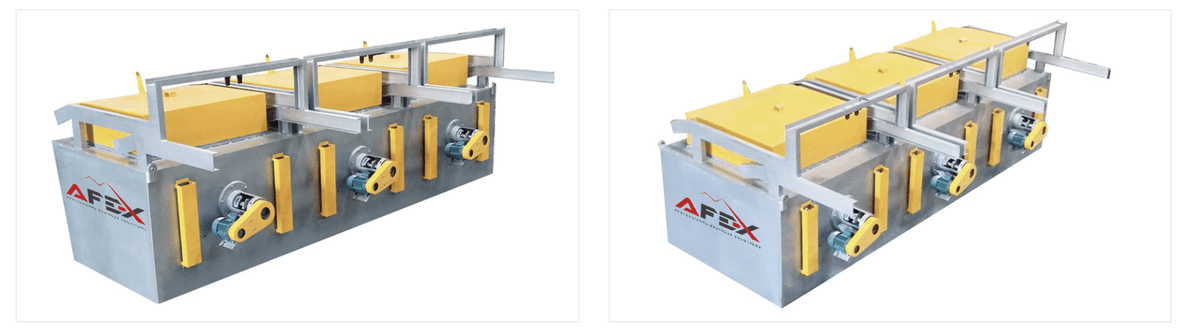
- Equipment Name
- Mold Heating Furnace
- Purpose
- Preheating extrusion dies
- Heating Method
- Infrared radiation and PID-controlled electric heating
- Heating Time
- Ø180 mm die – 15 min, Ø350 mm die – 60 min
- Temperature Accuracy
- ±15°C
- Control System
- PLC + Touch Panel
- Safety System
- Automatic shut-off if overheating or cooling failure
- Die Size
- Ø180–350 mm
- Dimensions
- ~1500 × 1000 × 1400 mm
- Power
- ~18 kW
High-efficiency preheating furnaces for aluminum extrusion lines from 600 to 4000 tons.
They are designed to heat aluminum billets with diameters 80–330 mm and lengths 6000–8000 mm.
Minimum billet cut length: 200 mm.
Equipped with 6 fuel burners, reducing heating time by up to 30 minutes compared to similar equipment.
Burners can be serviced without production shutdown.
Multi-Chamber Billet Heating & Cutting Furnace
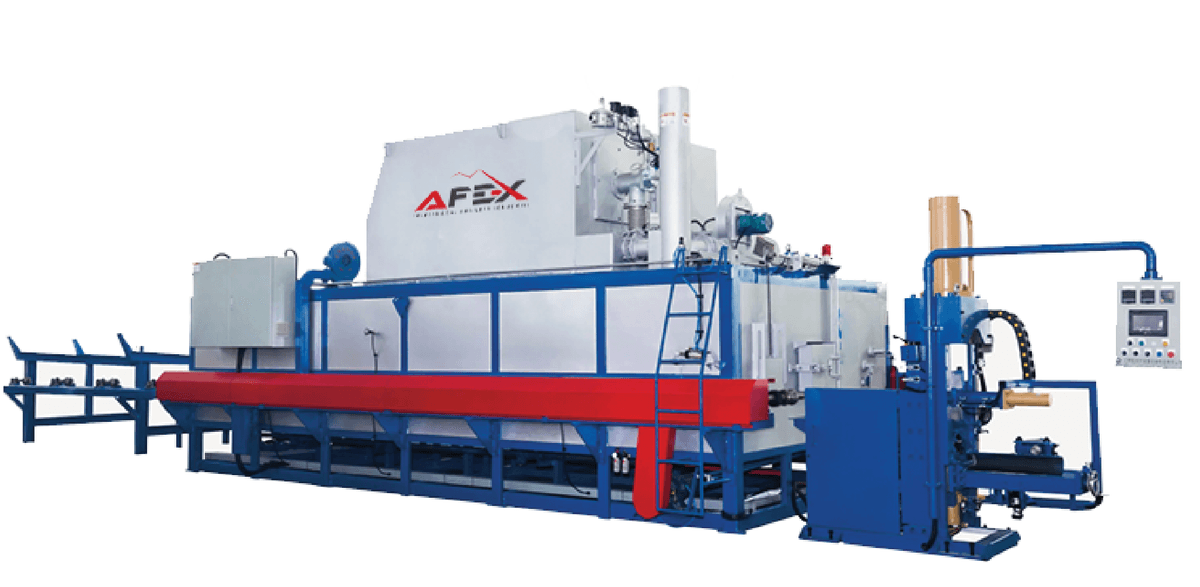
- Equipment Name
- Multi-chamber billet heating & cutting furnace
- Purpose
- Preheating aluminum billets and automatic cutting before extrusion
- Fuel Type
- Natural gas
- Heating Temperature
- 550–600°C
- Heating Method
- Gas combustion heat transfer
- Operation Mode
- Automatic, continuous rotation
- Cutting Force
- Up to 40 tons
- Billet Diameter
- Up to 102 mm
- Billet Length
- Up to 6000 mm
- Chambers
- 3–5
- Power
- ~20–25 kW
- Dimensions
- ~8 × 2.5 × 2.8 m
- Material
- Heat-resistant steel
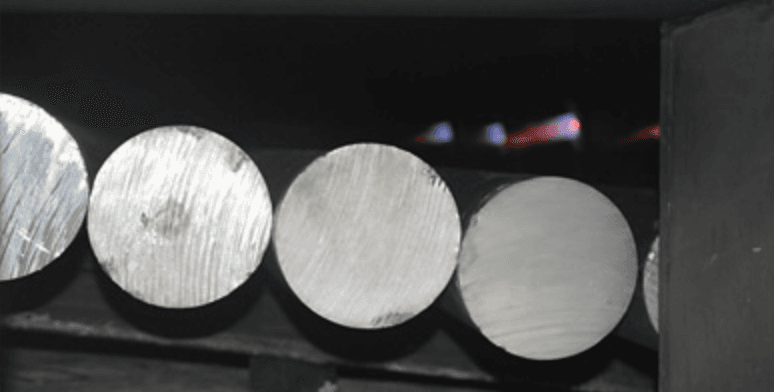
The furnace is automatically regulated, and the electronic pulse stirring system ensures uniform temperature inside the furnace. This prevents the aluminum rod from melting in only a certain part as a result of continuous burning.
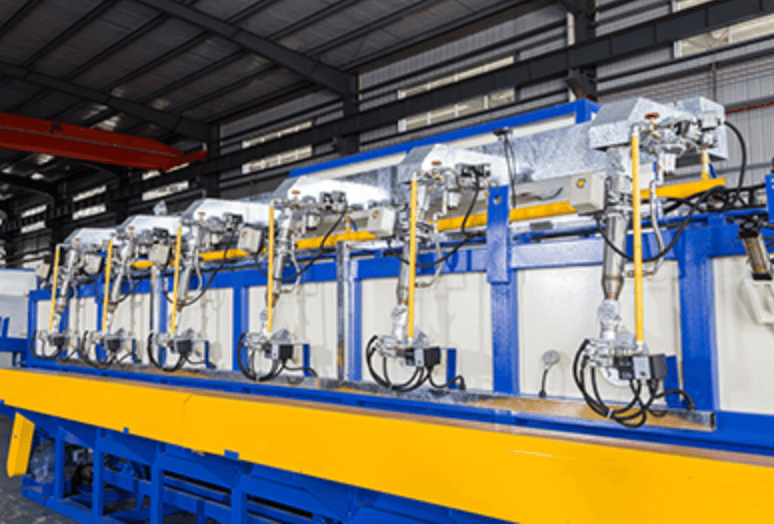
The stove allows simultaneous heating through 6 fuel injectors. Each injector can be controlled separately, which ensures a continuous combustion process in the stove.
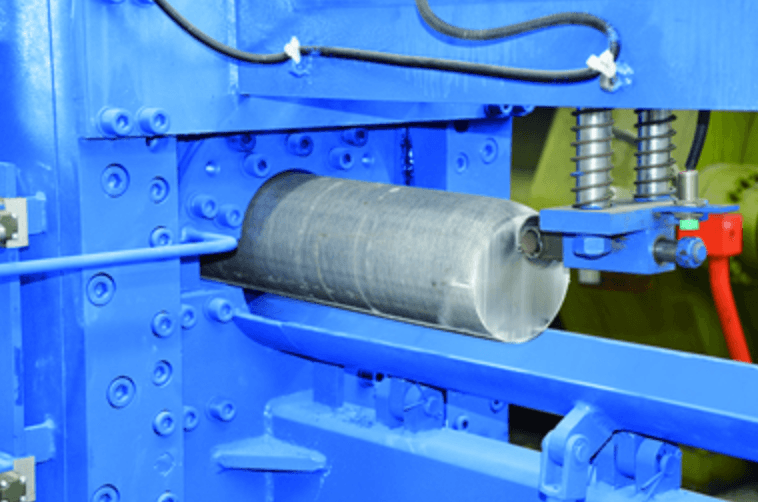
The heated aluminum rods are transferred to a vertical hot rod cutting machine for sizing and cutting. This step ensures the production of billets of the exact length required for the subsequent extrusion process.
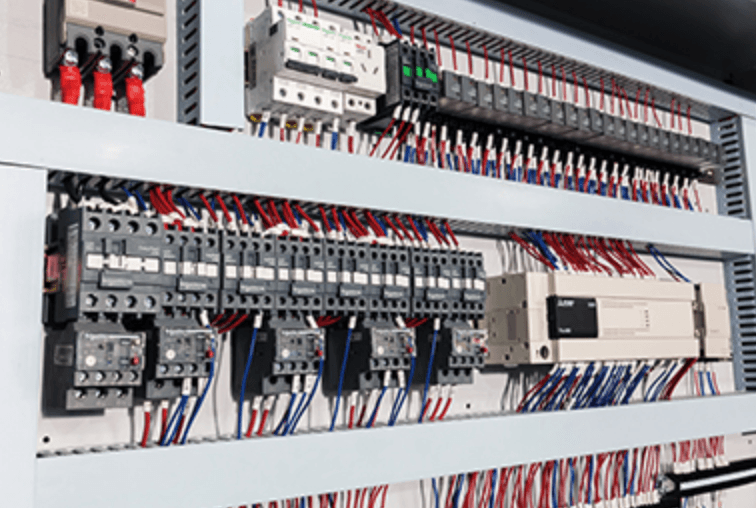
The equipment has a reliable control system, which uses Schneider Electric and Mitsubishi PLC controllers.
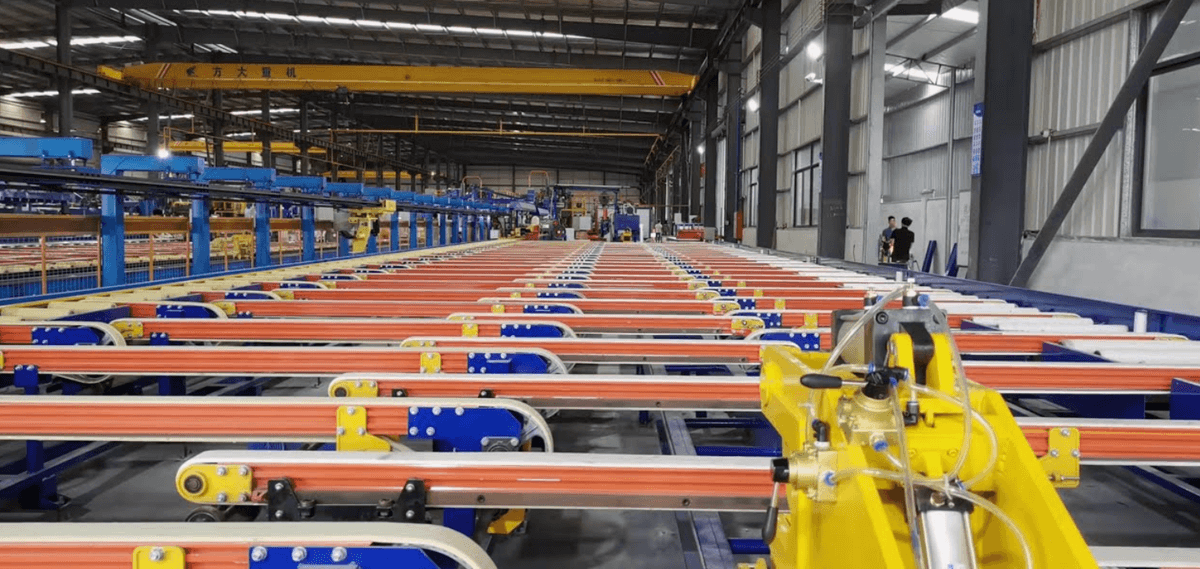
After stretching, aluminum profiles are placed on the cooling table for oxidation treatment and cutting preparation.
Cooling tables are available in manual and automatic modes.
Equipped with different conveyor systems: belt, belt + chain, or hydraulic walking beam.
The stretcher can be operated by a single operator and is fitted with video monitoring.
Automatic stacking system collects finished products.
Final cutting saws are equipped with absolute encoders for precise cutting.
High-Temperature Resistant Felt Cooling Table
- Equipment Name
- Felt-belt cooling table
- Purpose
- Cooling and transporting aluminum profiles after extrusion
- Belt Type
- Continuous felt belt
- Belt Material
- Heat-resistant industrial fabric
- Temperature Resistance
- Up to 300°C
- Cooling Method
- Natural cooling + air flow
- Belt Width
- 600–1000 mm (customized)
- Belt Length
- 10–30 m (project-based)
- Belt Speed
- 0.5–1.5 m/min
- Motor Power
- 1.5–3 kW
- Material
- Heat-resistant steel & aluminum
- Dimensions
- Customized
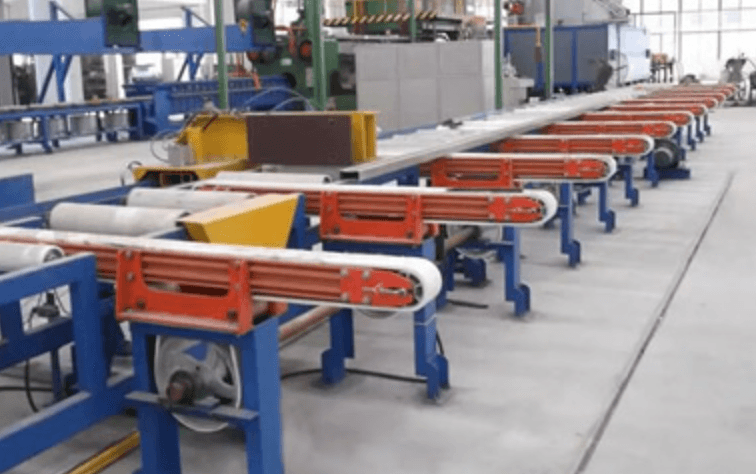 The final cutting saw and measuring table are equipped with a high-precision absolute encoder, ensuring fast and accurate positioning.
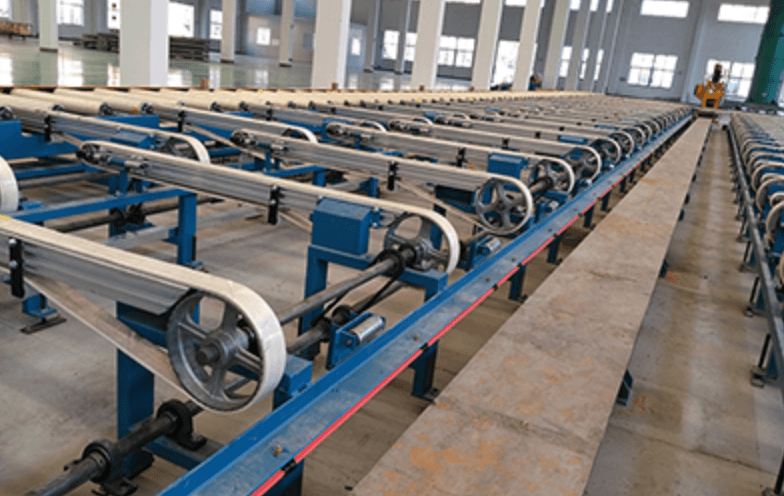 Cooling table: Frequency converter technology is used to control the belt speed, which effectively reduces the friction of the profiles.
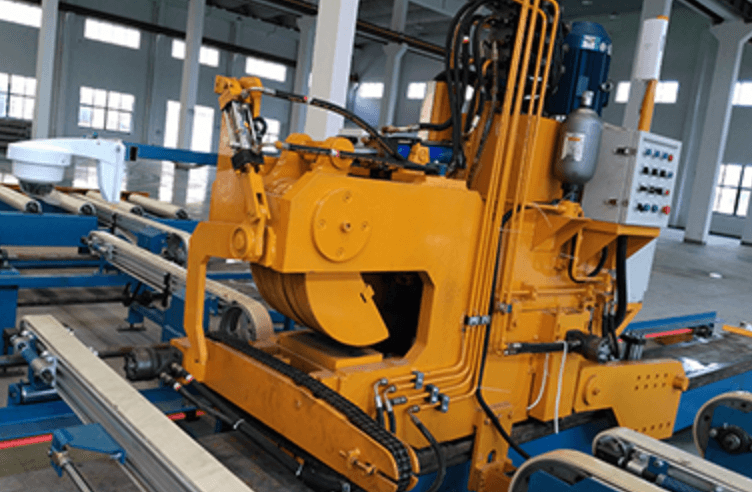 Stretcher: Can be operated by one person, two people or in fully automatic mode. The length, percentage and force of the stretch are preset and performed automatically, ensuring uniformity of the stretching process.
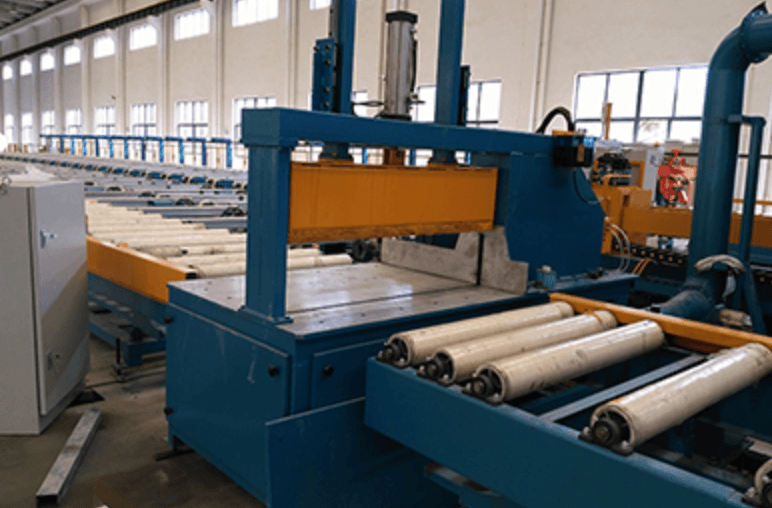
Finished product cutting equipment: the material feeding speed is adjustable, and it has a self-lubricating function, ensuring high-precision cutting and a smooth cut surface.
Aluminum Aging Furnace
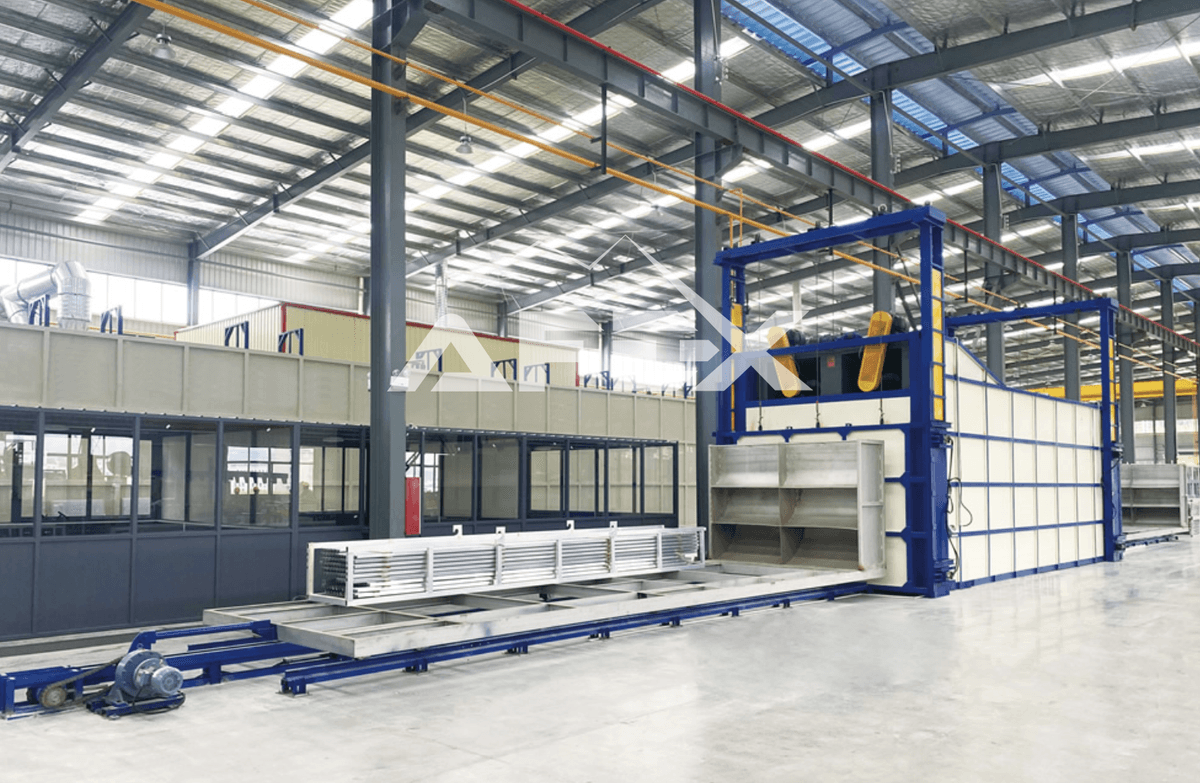
- Loading Basket
- 6–24 (size depends on material)
- Heating Types
- Natural gas, LPG, diesel, or electric
- Burner Types
- B40, BG400–BG500 (Sweden Bentone)
- Circulation Mode
- Hot air circulation
- Fan Power
- 11–55 kW
- Control System
- Automatic temperature control
- Furnace Door
- Manual or automatic
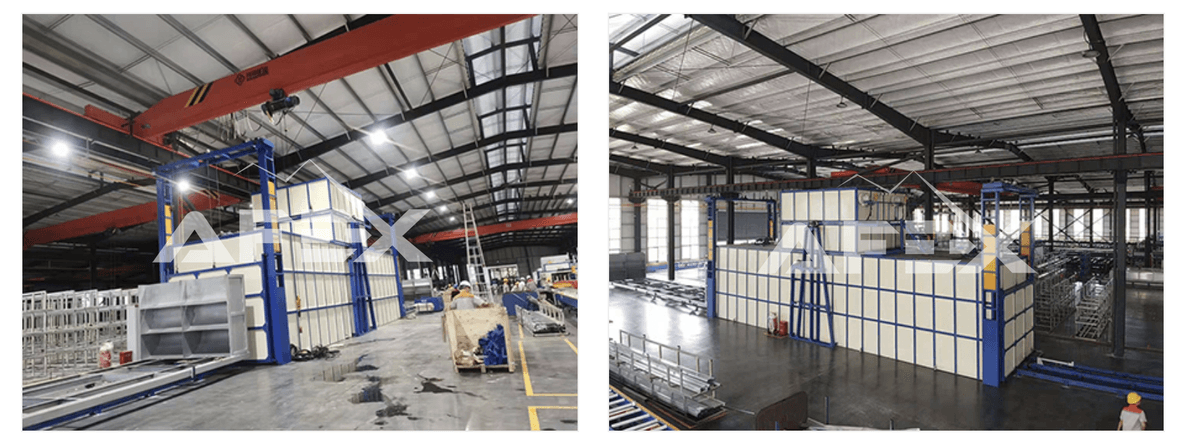
Aging (heat treatment) changes material properties, enhancing strength or formability.
Aging naturally occurs over time but can be accelerated with heat.
Shijia furnaces ensure uniform heating and high productivity.
Finished Products
Quick price request
Leave your name and phone number — our specialist will take care of the rest.
 EquipmentAluminum profiles production line
Your data is never shared with third parties
Specifications
Data provided by the manufacturer; configuration may vary per order.
General
13 parameters- Model
- 630GH
- Country of Manufacture
- China
- Raw Material
- Aluminum billet (102 mm, 6 m)
- Product Type
- Aluminum profiles
- Production Capacity
- 3000 kg/furnace, continuous extrusion
- Material
- Heat-resistant steel, aluminum alloys
- Equipment Weight
- 25 tons
- Dimensions
- 7 × 2.8 × 3.2 m
- Voltage / Power
- 380V, 55 kW main motor, 18 kW heating
- Workforce
- 4–6 persons
- Electricity Consumption
- Approx. 100 kW
- Gas Consumption
- Natural gas
- Sewage Required
- No
Unit 2
14 parameters- Model
- 630GH
- Extrusion Pressure
- 633 tons
- Aluminum Billet Diameter
- 102 mm
- Main Motor Power
- 55 kW
- Heating Power
- 18 kW
- Extrusion Speed
- up to 8.8 mm/s
- Equipment Dimensions
- 7 × 2.8 × 3.2 m
- Equipment Weight
- 25 tons
- Cooling Table Size
- 26 × 6 m
- Thermal Furnace Capacity
- 3000 kg/furnace
- Thermal Furnace Temperature
- up to 250°C
- Mold Furnace Power
- 18 kW
- Hot Cutting Furnace Fuel
- Natural gas
- Total Line Length
- At least 60 meters
Extrusion Presses Technical Table
15 parameters- Model
- Working Pressure (MPa) · Piston Diameter (mm) · Side Cylinder Size (mm) · Billet Size (mm) · Press Height (mm) · Output Size (mm) · Total Power (kW) · Dimensions (mm) · Weight (t)
- 500T
- 21 · Ø520 · Ø125 × Ø70 · Ø80 × 380 · 850 · Ø110 × 110 · 72 · 5700 × 3100 × 2500 · 20
- 600T
- 21 · Ø580 · Ø160 × Ø120 · Ø90 × 480 · 850 · Ø110 × 110 · 105 · 6000 × 3200 × 2600 · 24
- 700T
- 21 · Ø620 · Ø160 × Ø120 · Ø100 × 520 · 1030 · Ø120 × 140 · 130 · 7900 × 2800 × 3500 · 38
- 800T
- 21 · Ø660 · Ø180 × Ø140 · Ø110 × 530 · 1050 · Ø130 × 150 · 132 · 8500 × 3015 × 3560 · 42
- 1000T
- 21 · Ø750 · Ø200 × Ø150 · Ø120 × 600 · 1095 · Ø140 × 160 · 195 · 9660 × 3070 × 3900 · 53
- 1250T
- 21 · Ø840 · Ø200 × Ø150 · Ø140 × 650 · 1180 · Ø170 × 200 · 250 · 11920 × 3230 × 3900 · 65
- 1400T
- 21 · Ø870 · Ø220 × Ø150 · Ø150 × 680 · 1180 · Ø180 × 210 · 260 · 11920 × 3230 × 3900 · 70
- 1650T
- 21 · Ø950 · Ø220 × Ø150 · Ø178 × 800 · 1530 · Ø210 × 260 · 315 · 13400 × 3580 × 4900 · 90
- 2000T
- 21 · Ø1050 · Ø250 × Ø180 · Ø200 × 800 · 1680 · Ø240 × 300 · 350 · 1650 × 4000 × 5100 · 136
- 2500T
- 21 · Ø1180 · Ø250 × Ø180 · Ø228 × 1000 · 2030 · Ø280 × 350 · 550 · 17500 × 6000 × 6500 · 250
- 3000T
- 28 · Ø1180 · Ø250 × Ø180 · Ø254 × 1000 · 2030 · Ø338 × 480 · 780 · 17500 × 6000 × 6500 · 300
- 4350T
- 28 · Ø1350 · Ø320 × Ø220 · Ø280 × 1000 · 2280 · Ø450 × 500 · 960 · 19500 × 6900 × 7500 · 350
- 5500T
- 28 · Ø1500 · Ø380 × Ø250 · Ø400 × 1200 · 2350 · Ø490 × 620 · 1660 · 22000 × 8000 × 10000 · 650
- 8200T
- 28 · Ø1780 · Ø480 × Ø320 · Ø485 × 1750 · 2585 · Ø550 × 800 · 2500 · 28000 × 9800 × 11000 · 800
Mold Heating Furnace
10 parameters- Equipment Name
- Mold Heating Furnace
- Purpose
- Preheating extrusion dies
- Heating Method
- Infrared radiation and PID-controlled electric heating
- Heating Time
- Ø180 mm die – 15 min, Ø350 mm die – 60 min
- Temperature Accuracy
- ±15°C
- Control System
- PLC + Touch Panel
- Safety System
- Automatic shut-off if overheating or cooling failure
- Die Size
- Ø180–350 mm
- Dimensions
- ~1500 × 1000 × 1400 mm
- Power
- ~18 kW
Multi-Chamber Billet Heating & Cutting Furnace
13 parameters- Equipment Name
- Multi-chamber billet heating & cutting furnace
- Purpose
- Preheating aluminum billets and automatic cutting before extrusion
- Fuel Type
- Natural gas
- Heating Temperature
- 550–600°C
- Heating Method
- Gas combustion heat transfer
- Operation Mode
- Automatic, continuous rotation
- Cutting Force
- Up to 40 tons
- Billet Diameter
- Up to 102 mm
- Billet Length
- Up to 6000 mm
- Chambers
- 3–5
- Power
- ~20–25 kW
- Dimensions
- ~8 × 2.5 × 2.8 m
- Material
- Heat-resistant steel
High-Temperature Resistant Felt Cooling Table
12 parameters- Equipment Name
- Felt-belt cooling table
- Purpose
- Cooling and transporting aluminum profiles after extrusion
- Belt Type
- Continuous felt belt
- Belt Material
- Heat-resistant industrial fabric
- Temperature Resistance
- Up to 300°C
- Cooling Method
- Natural cooling + air flow
- Belt Width
- 600–1000 mm (customized)
- Belt Length
- 10–30 m (project-based)
- Belt Speed
- 0.5–1.5 m/min
- Motor Power
- 1.5–3 kW
- Material
- Heat-resistant steel & aluminum
- Dimensions
- Customized
Aluminum Aging Furnace
7 parameters- Loading Basket
- 6–24 (size depends on material)
- Heating Types
- Natural gas, LPG, diesel, or electric
- Burner Types
- B40, BG400–BG500 (Sweden Bentone)
- Circulation Mode
- Hot air circulation
- Fan Power
- 11–55 kW
- Control System
- Automatic temperature control
- Furnace Door
- Manual or automatic
Included units
Units and accessories included with the equipment. Specifications for each are in the section above.
- 01
- 02
- 03
Multi-Chamber Billet Heating & Cutting Furnace
13 parameters
- Heating Temperature: 550–600°C
- Cutting Force: Up to 40 tons
- 04
High-Temperature Resistant Felt Cooling Table
12 parameters
- Temperature Resistance: Up to 300°C
- Belt Width: 600–1000 mm
- 05
Aluminum Aging Furnace
7 parameters
- Loading Basket: 6–24 (size depends on material)
- Fan Power: 11–55 kW
Video
The equipment in operation.
Delivery and commissioning
From consultation to launch — four steps under contract.

Consultation
We define your needs, configure the line and prepare an offer.

Contract
Timeline, payment terms and warranty are fixed in the contract.
Delivery
The equipment is delivered from the manufacturer to your site.

Installation and training
Our specialists commission the equipment and train your operators.
Frequently asked questions
The most common questions about delivery, contracts and tracking.
Is it possible to track my orders online?
How long will the shipments be delivered?
What are the shipping methods available?
What is required of me to conclude a contract?
Let’s discuss your project together
Contact us for advice on choosing equipment, technical solutions and offers.
Follow our channels
New equipment, commissioning and production footage — on our official channels.
Related equipment
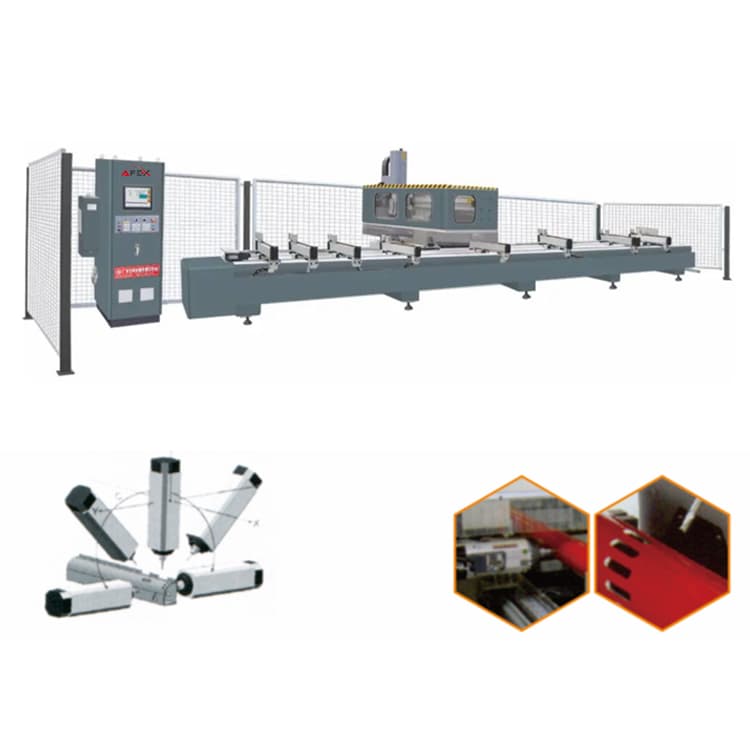
Fast 4-axis profile machining CNC center
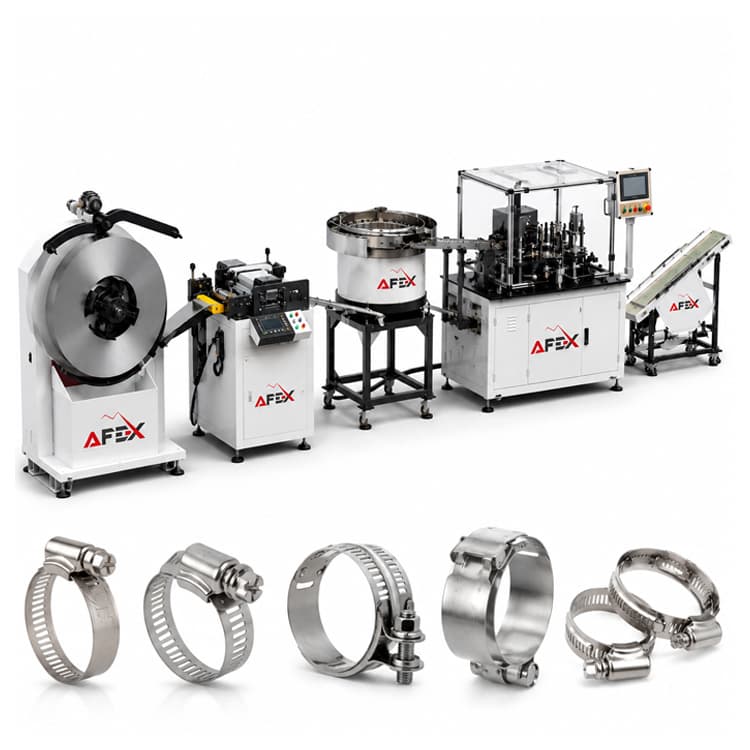
Hose clamp assembly line
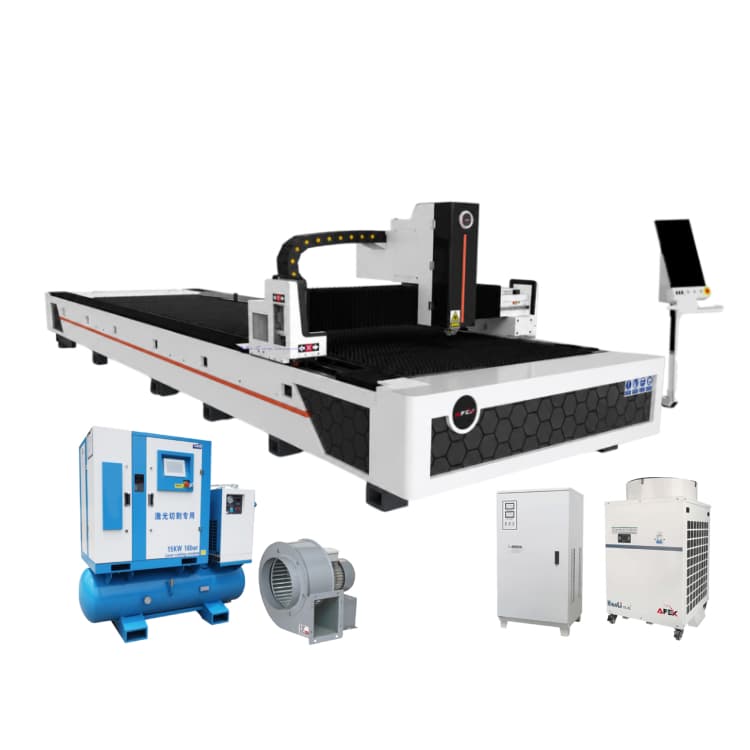
Laser Cutting Machine AFX-6015 6000W
Laser Cutting Machine AFX-6015 3000W
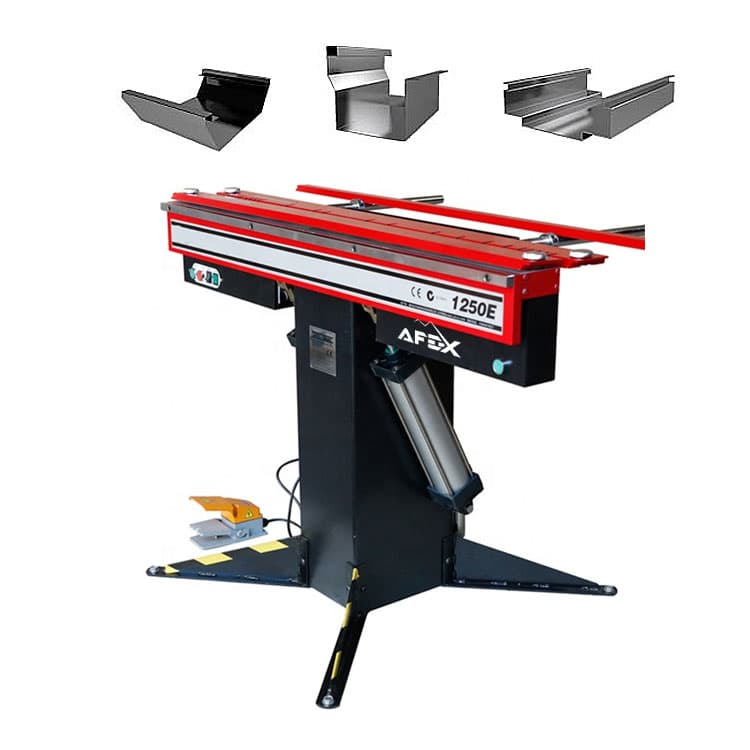
Pneumatic Sheet Metal Folding Machine AFL-1250e
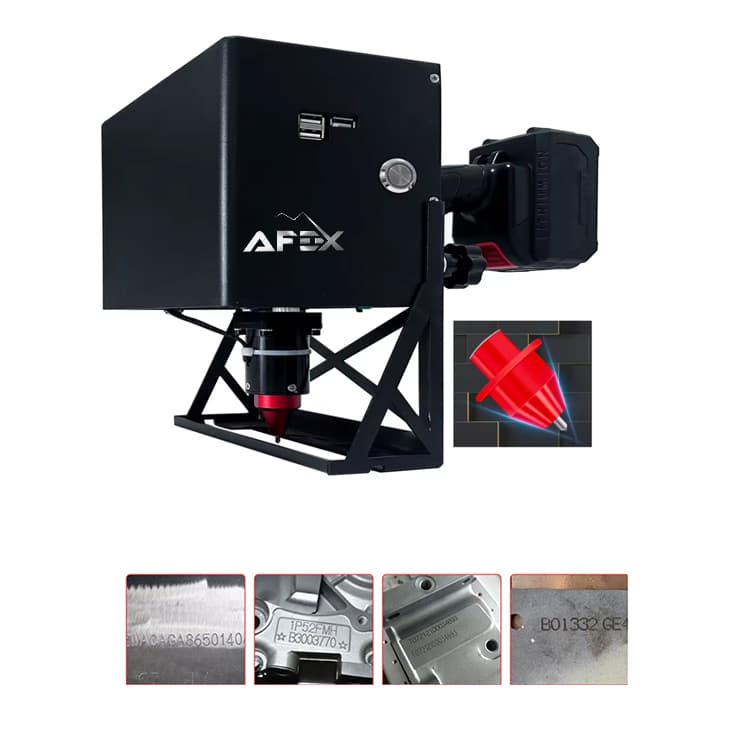
AFEX portable metal marking equipment
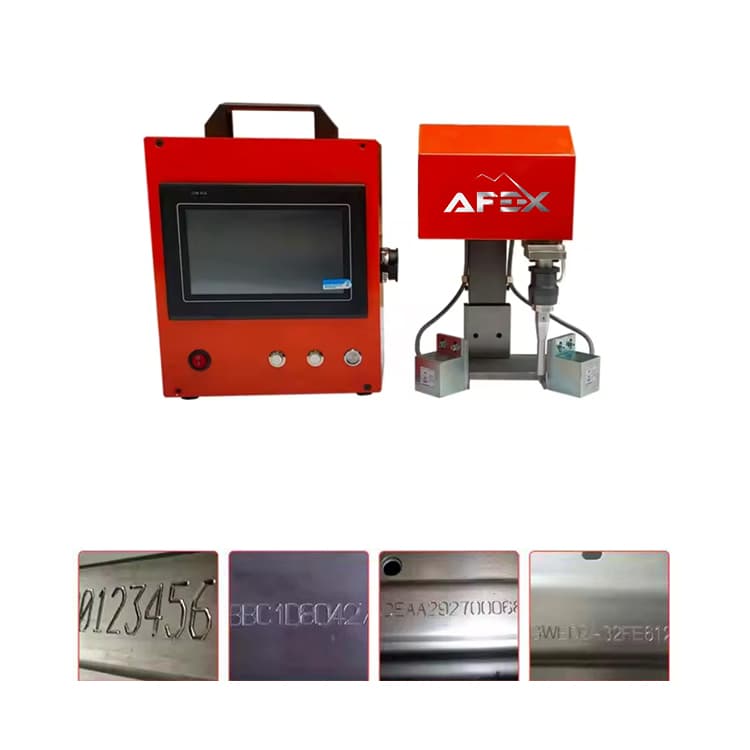
AFEX metal surface marking equipment
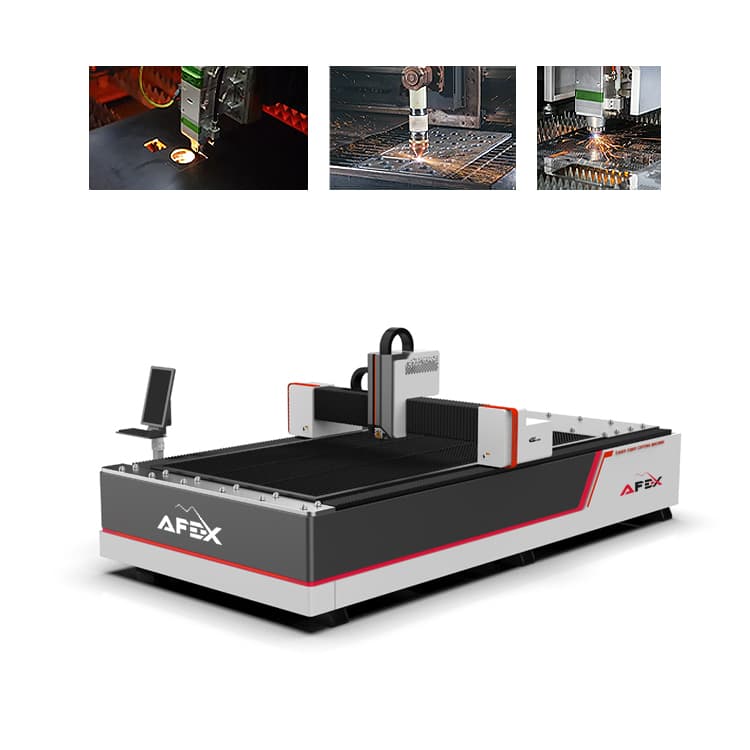
Laser Cutting Machine AF-L3015 1500W
Business ideas with this equipment
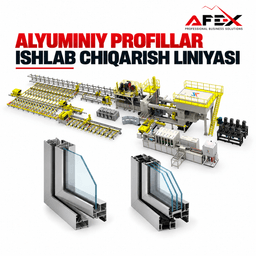 Aluminium Profile Production LineThe aluminium profile production line is designed to heat aluminium alloy billets, extrude them through a die on a hydraulic press, then stretch-straighten, cut, age-harden and surface-finish them into profiles of various cross-sections. It enables the production of lightweight, corrosion-resistant profiles for windows, doors, facades, furniture and industrial structures.Details
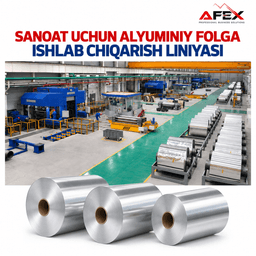 Industrial Aluminium Foil Production LineThe industrial aluminium foil production line is designed to roll cast aluminium strip down in successive passes on rolling mills, then anneal and slit it into technical foil of various gauges. It enables the production of high-quality foil coils for the packaging, pharmaceutical, cable, insulation and HVAC industries.Details
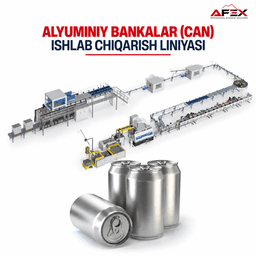 Aluminium Beverage Can Production LineThe aluminium beverage can production line is designed to blank and draw cups from aluminium coil, iron the walls (DWI process), trim, wash, coat the cans inside and out, print them in multiple colours and form the necks. It enables the production of lightweight, hermetic and recyclable two-piece cans for soft drinks, juices and energy drinks.Details
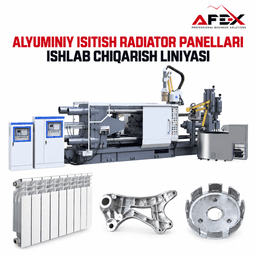 Aluminium Heating Radiator Section Production LineThe aluminium heating radiator section production line is designed to melt aluminium alloy, cast radiator sections on a high-pressure die-casting machine, then machine them, assemble them with nipples, pressure-test and powder-coat them. It enables the production of lightweight, fast-heating sectional radiators for residential and public buildings, as well as other aluminium die-cast parts.Details